 card-story-food-v3.webp
The Highland Table
Seasonal plates made by farmers and cooks.
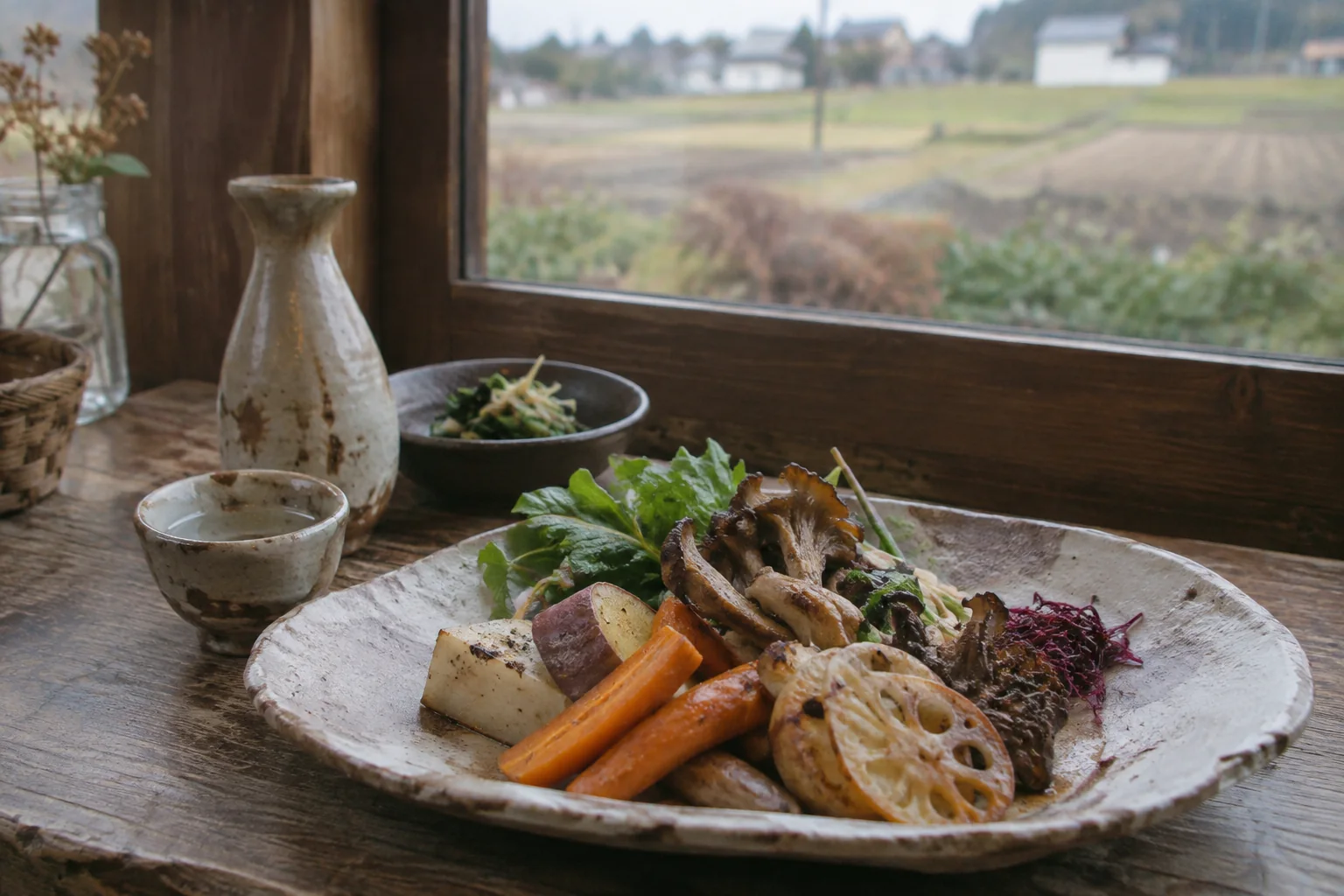
Hokuto's seasonal plates come from fields spread between 400 and 1,000 meters above sea level, rich in sunshine, and from the cooks who work right next to them.
Fields shaped by altitude and sunshine
In Hokuto, vegetables grow on land from about 400 to 1,000 meters above sea level. That range is one reason the city grows so many different crops[1]. The city also describes itself as having the most hours of sunshine in Japan[2].
The main crops are rice such as Koshihikari, and vegetables such as Asao daikon radish, green beans and tomatoes. Wine grapes, blueberries, cherries and apples grow here too. There are also about 1,000 dairy cows and about 1,000 beef cattle[1]. Organic farming is popular with newcomers to farming, and it now covers about 100 hectares, roughly 2% of the city's farmland[1].
Kitchens close to the fields
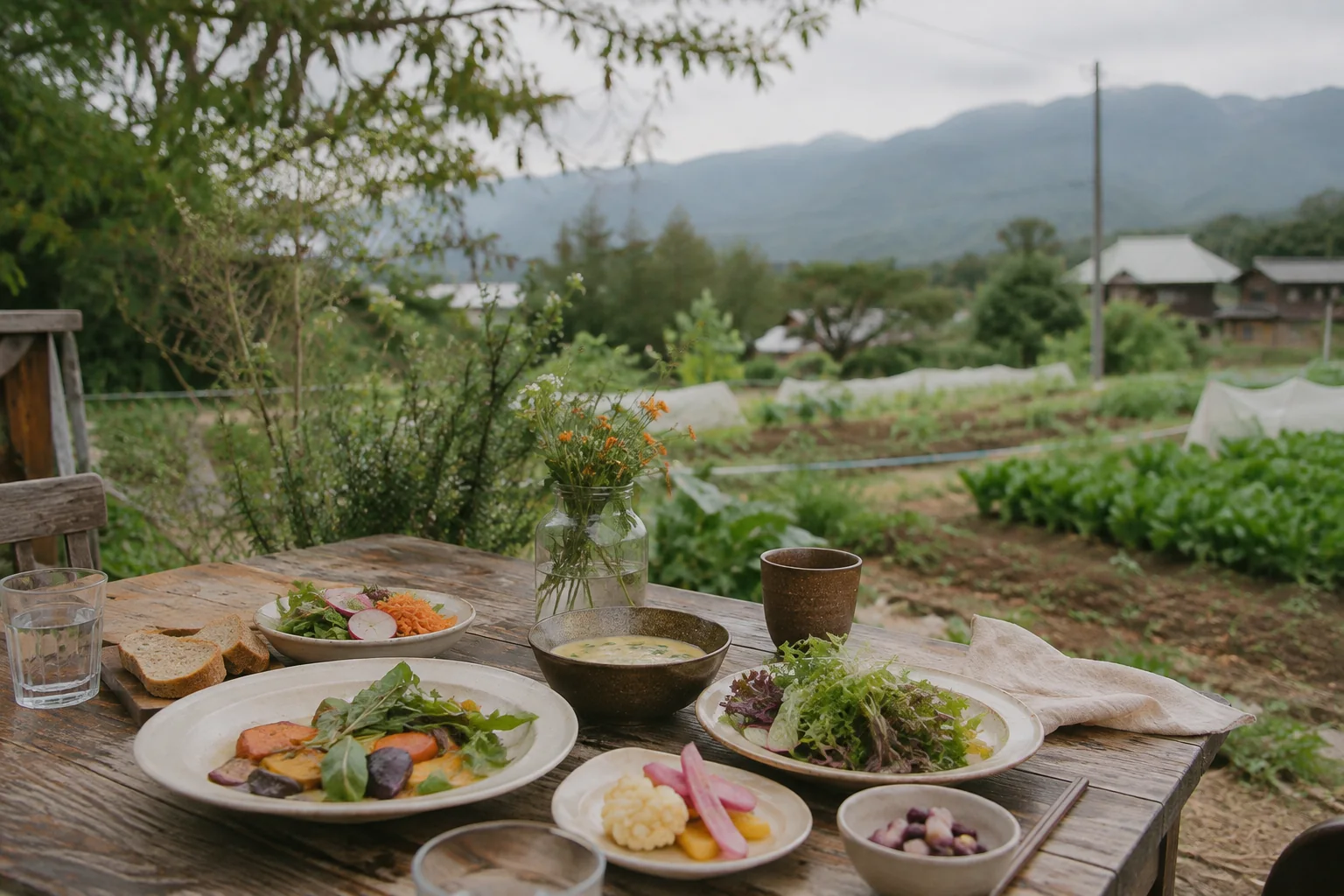
In Hokuto, some restaurants and inns cook right next to the fields. Among this site's sample places, Komorebi Forest KitchenSample in Oizumi cooks lunch with vegetables from its own fields, and Makiba Farm DinerSample in Takane serves set meals of pork and eggs from its farm.
Stay at Yubae Farm CottageSample in Akeno and you can make breakfast from a basket of just-picked vegetables. With the fields and the cooks this close, the season reaches the plate as it is.
Where to experience this story
A sample kitchen. Lunch plates of its own vegetables, and a café facing the forest.
 place-8002-hero.webp
Eat · Oizumi
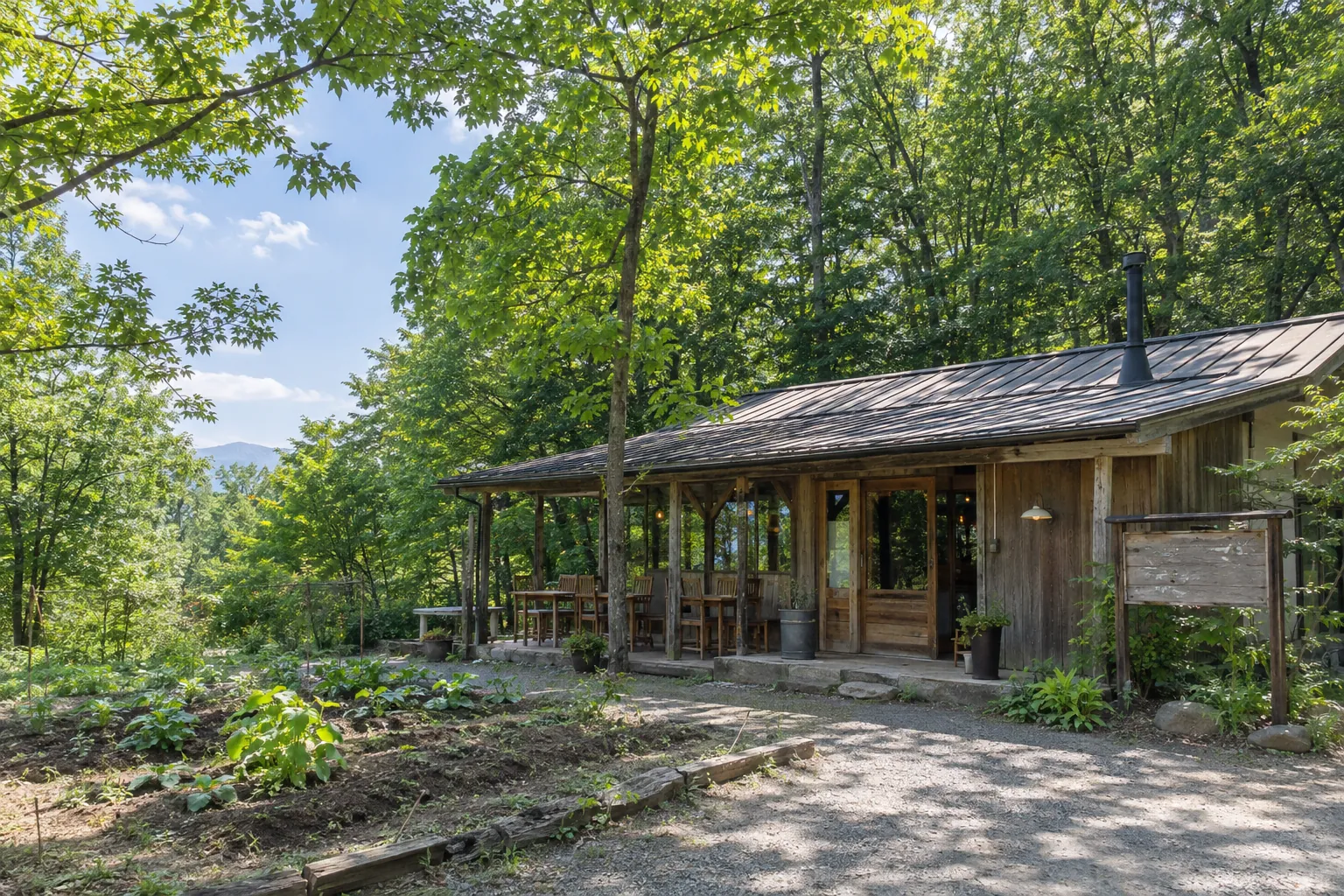
Komorebi Forest KitchenSample
A forest kitchen cooking with vegetables from its own fields.
Tip
Komorebi grows its vegetables in fields a short walk from the kitchen. As you eat, picture where in the view outside each vegetable on your plate grew. Come a little after the lunchtime rush and you can take your time with the sound of the woods.
- Price guide
- Lunch from ¥2,200, café from ¥600
- Languages
- Japanese
- Closed
- Wednesdays (Wed and Thu, Dec to Mar)
A sample diner. Set meals of the farm's own pork and eggs, with fresh eggs to take home.
 place-8006-hero.webp
Eat · Takane
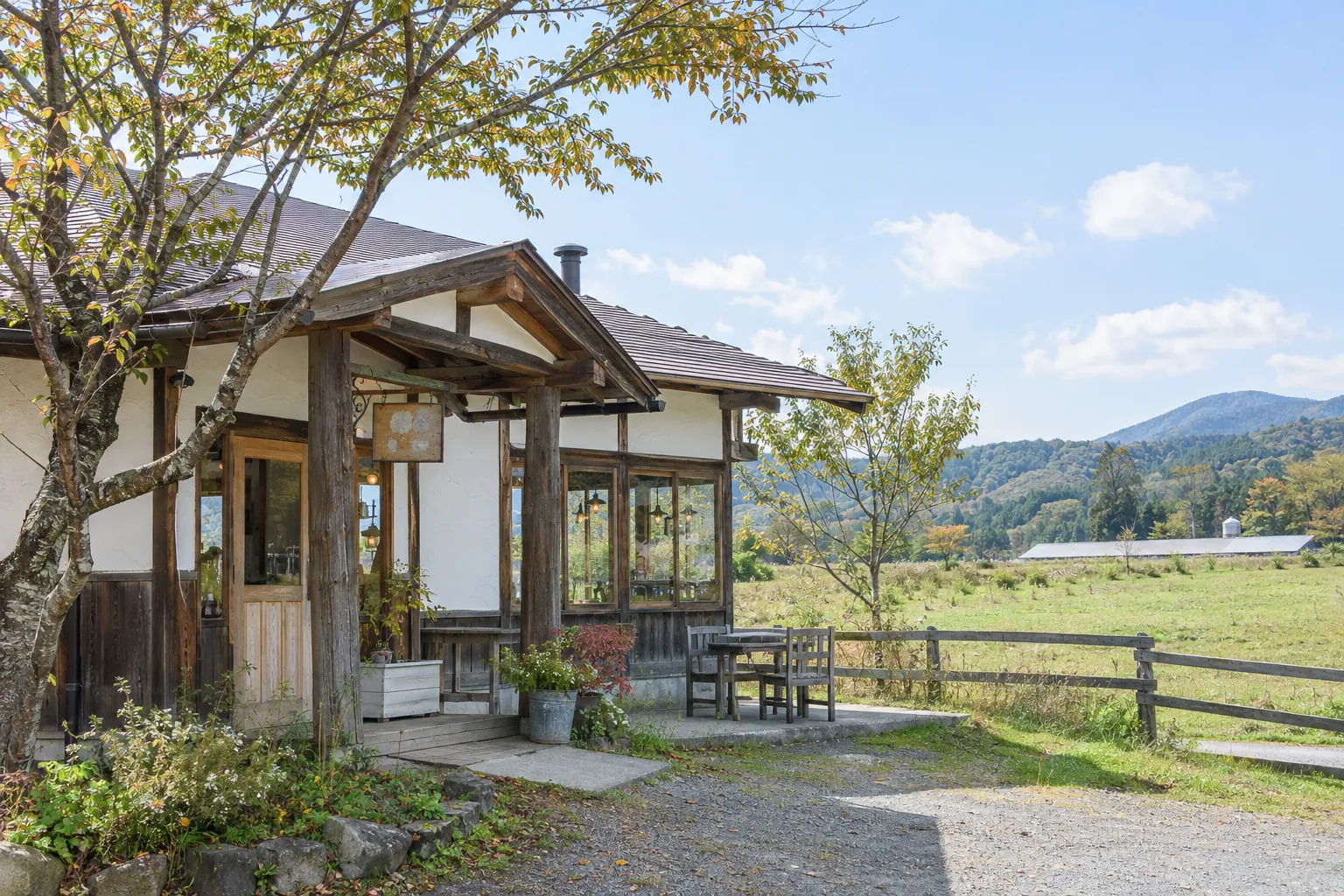
Makiba Farm DinerSample
A farm diner with set meals of its own pork and eggs.
Tip
Makiba is run by the farming family. Next to the till, a notice explains how the pigs are raised and fed. Read it before you eat and the same dish tastes different.
- Price guide
- About ¥1,200–1,400
- Languages
- Japanese
- Closed
- Thursdays
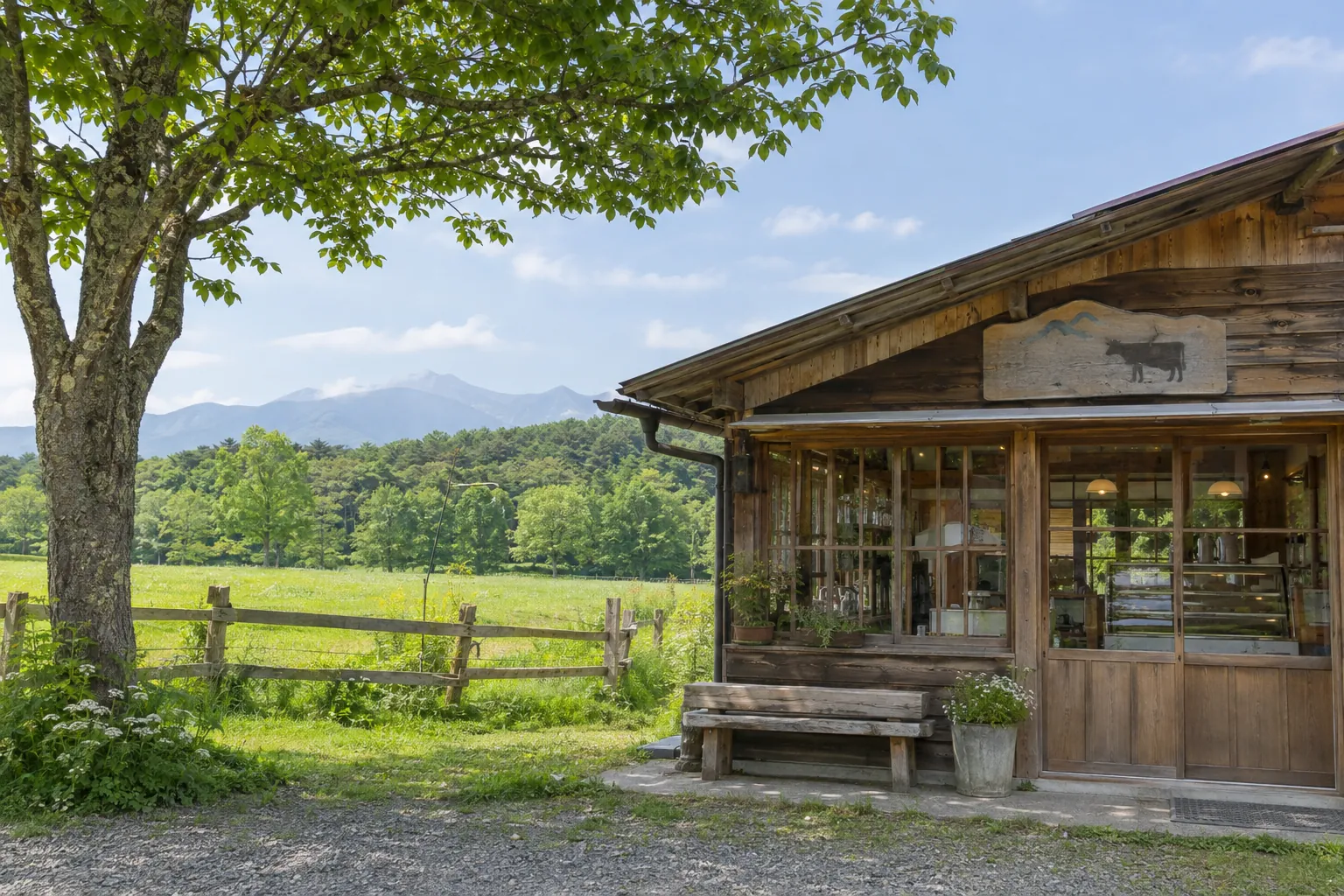
A sample stand. Soft-serve and milk drinks with a view of the pasture.
 place-8007-hero.webp
Eat · Takane
Highland Milk StandSample
Soft-serve and a café using milk from the farm.
Tip
The Highland Milk Stand uses milk from the farm next door. Try the soft-serve plain first to taste the milk itself. On a sunny day, eat it on the benches outside, watching the cows.
- Price guide
- Soft-serve from ¥450
- Languages
- Japanese
- Closed
- Open daily (closed Tuesdays in Jan and Feb)
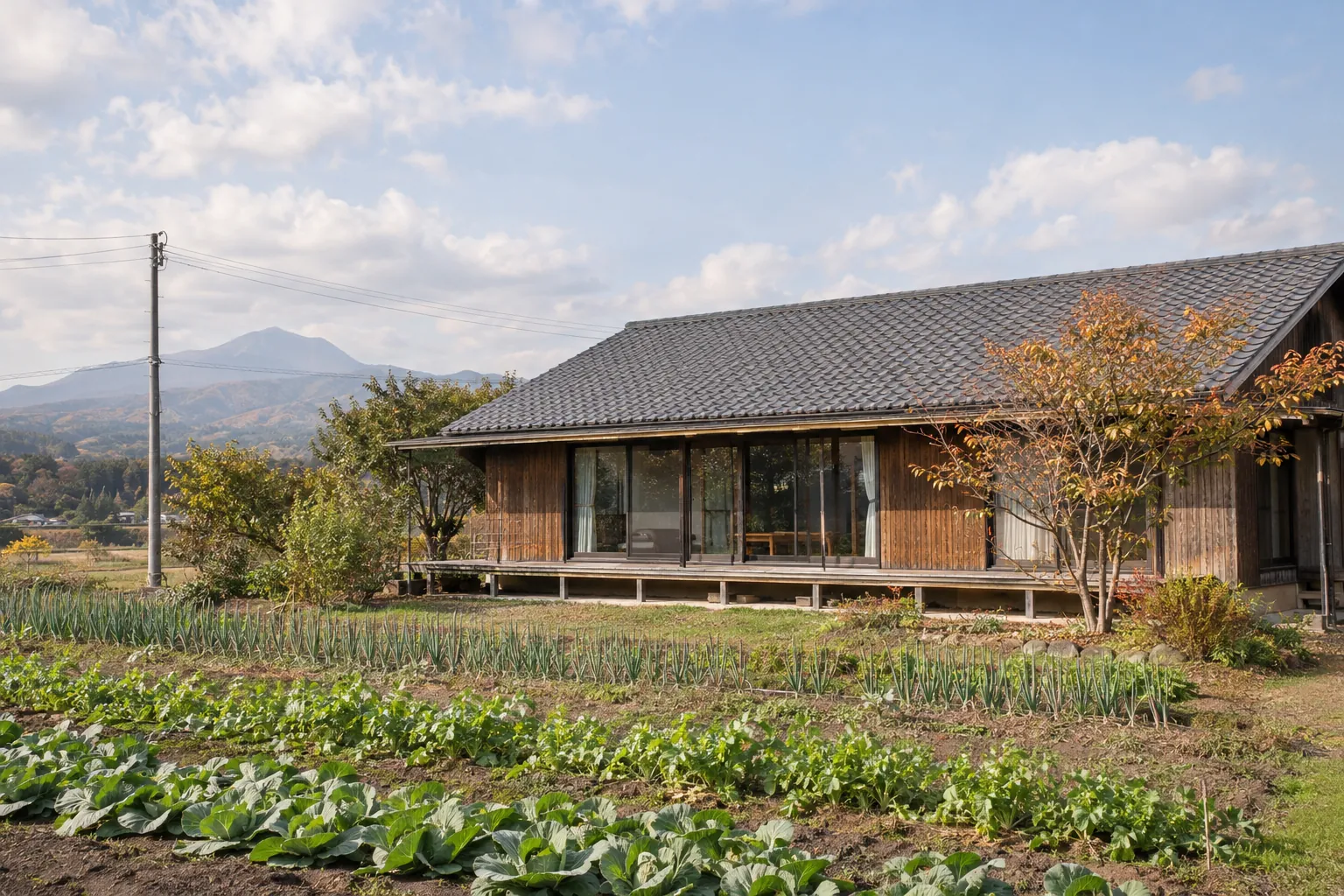
A sample cottage. Stay in a house among the fields and make breakfast from just-picked vegetables.
 place-8026-hero.webp
Stay · Akeno
Yubae Farm CottageSample
A private cottage with a kitchen among the fields.
Tip
Yubae lets you borrow a slice of farm life. When you arrive, step out onto the veranda and take in the width of the fields and the sky. Order the morning vegetable basket, and cooking your own breakfast becomes part of the trip.
- Price guide
- From ¥32,000 per night for the house (up to 4, room only)
- Check-in
- 15:00–19:00
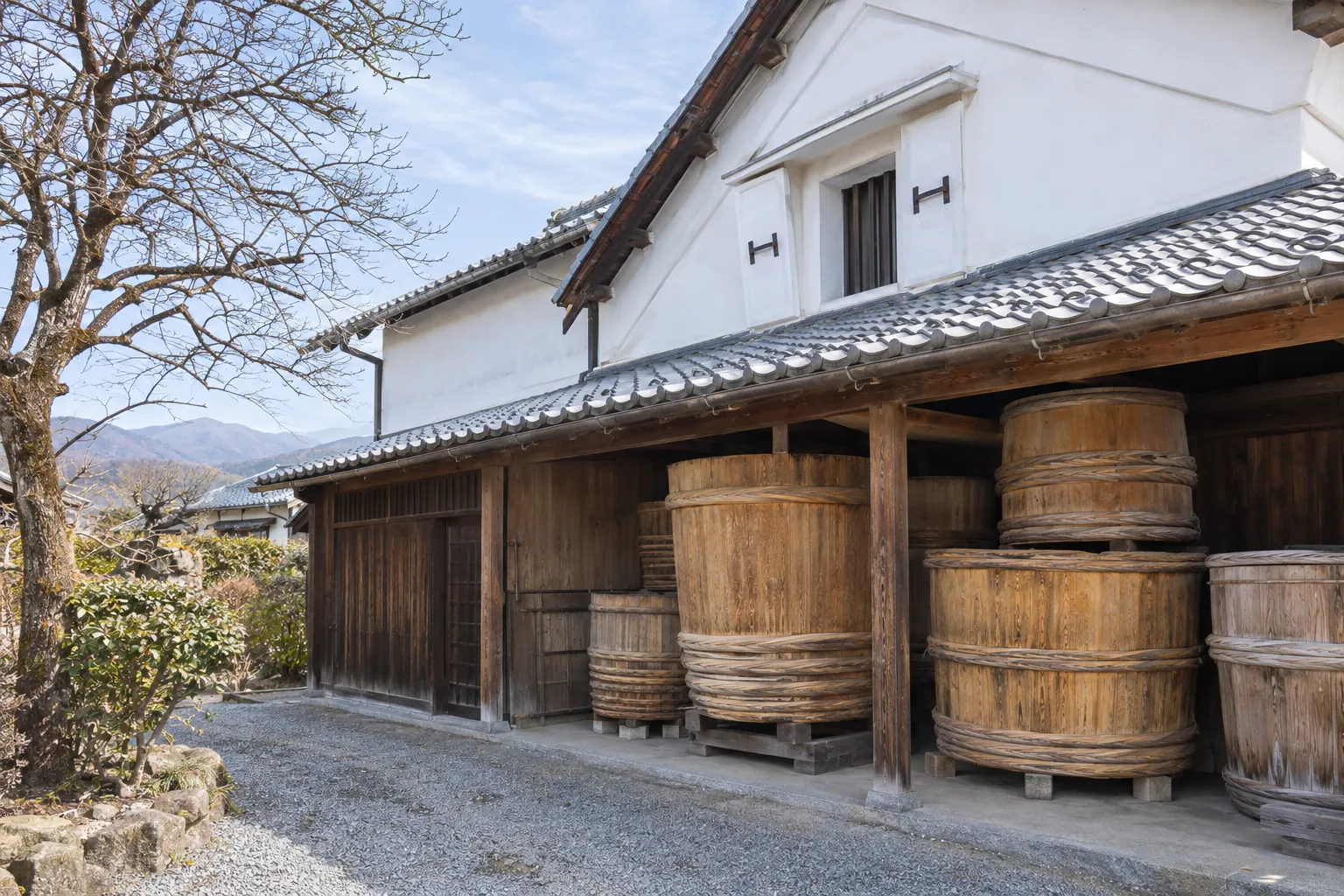
A sample works. Mash soybeans with koji and salt to make your own miso.
 place-8021-hero.webp
Experience · Akeno
Maruyama Miso & Shoyu WorksSample
Make your own miso and see the wooden vats.
Tip
The key is mixing the mashed soybeans and koji well, then packing them tight to push out the air. The miso you take home will be ready in about six months. In the works, compare the colors of miso of different ages.
- Price guide
- Miso class ¥3,500 per person (about 2 kg to take home; booking required). Works visit free
- Languages
- Japanese
- Closed
- Sundays, New Year holidays
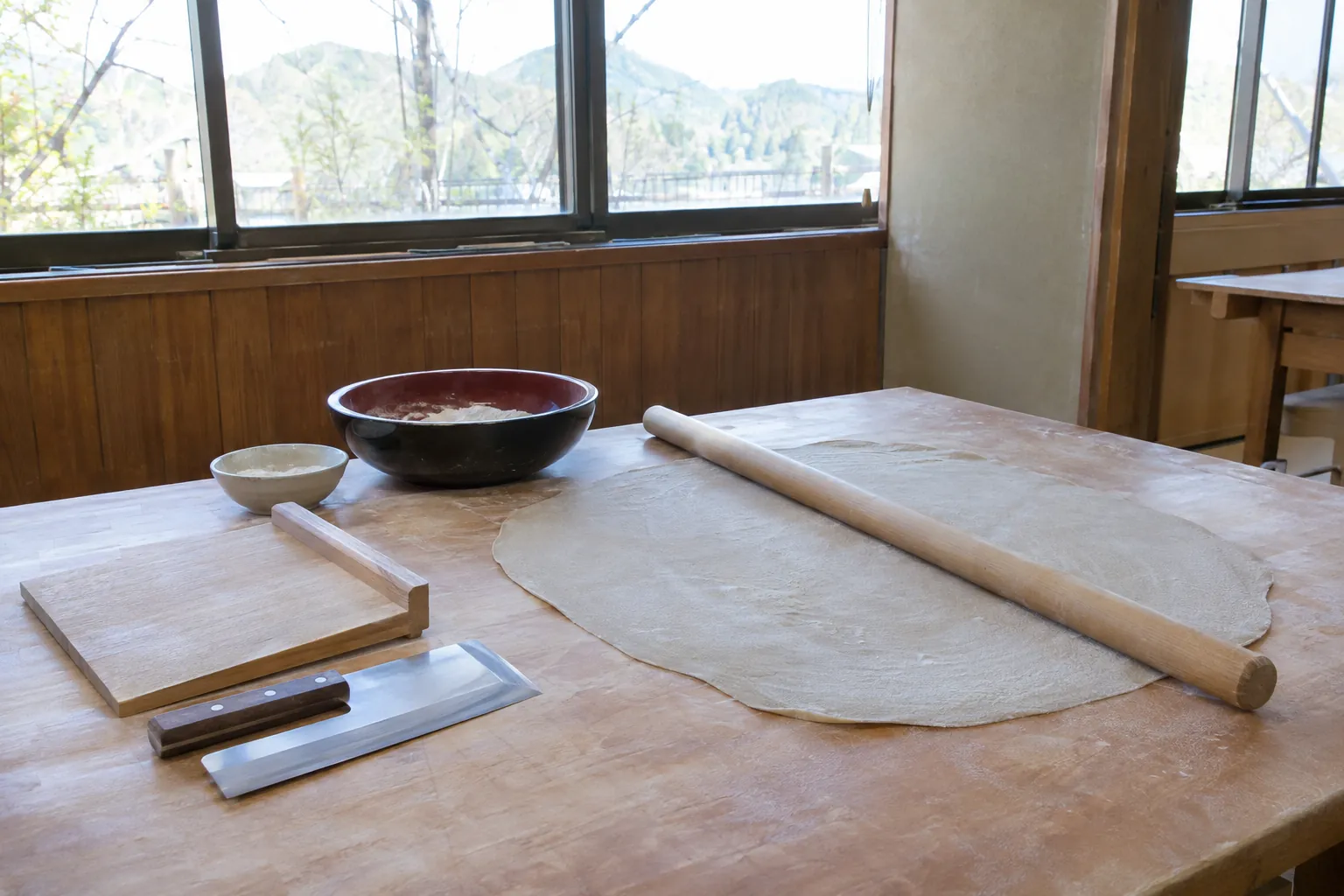
A sample school. Knead, roll and cut soba, then eat it fresh.
 place-8016-hero.webp
Experience · Oizumi
Hitotsu-bachi Soba SchoolSample
Make soba and eat it for lunch.
Tip
The most important step is the first one: working water into the flour little by little. Watch the teacher’s hands closely. Your soba is boiled on the spot, so taste a strand plain first to catch its aroma.
- Price guide
- Soba class ¥5,000 per table (up to 4). Tempura ¥600 a plate
- Languages
- Japanese
- Closed
- Thursdays, 28–31 Dec
A sample restaurant. A lunch set made with the brewery's koji and sake lees.
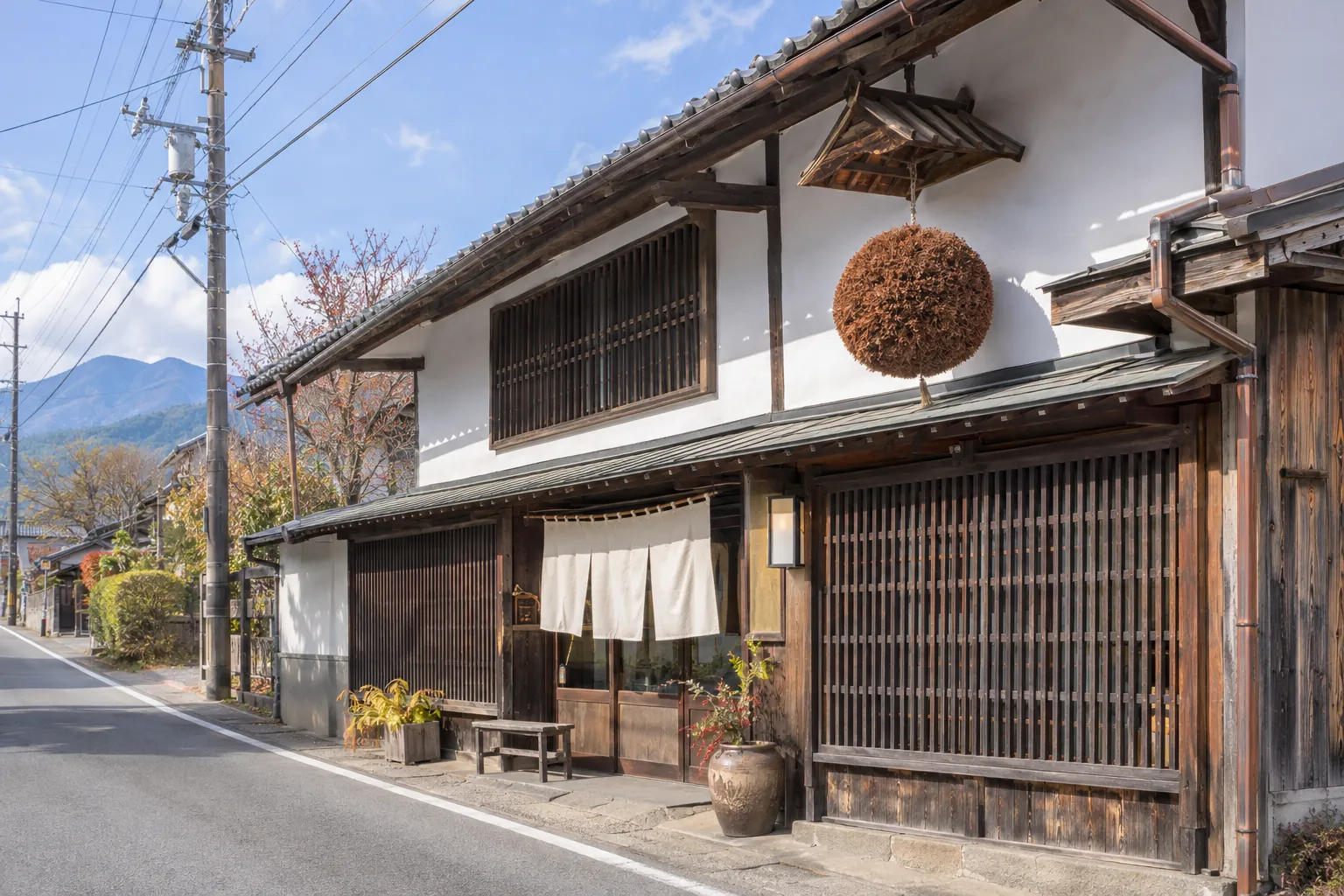 place-8013-hero.webp
Drink · Hakushu
Taru-no-Ma Brewery DiningSample
Fermented dishes made with the brewery’s koji and sake lees.
Tip
Taru-no-Ma is run by a post-town sake brewery. The koji and lees in the food come from the brewery next door. If you don’t drink, follow the brewery’s flavours through amazake and its brewing water.
- Price guide
- Lunch ¥1,800–2,400
- Languages
- Japanese
- Closed
- Tuesdays (next day if a holiday), New Year
How to experience it
Private tour
Visit a farm with a guide, then have lunch at a restaurant that cooks the harvest.
Self-guided
Follow this page in order, Komorebi Forest Kitchen (sample), Makiba Farm Diner (sample) and Highland Milk Stand (sample), at your own pace.
Sources
- 北杜市における有機農業の推進について(北杜市 商工・食農課、農林水産省関東農政局 説明会資料、2023-02-20) www.maff.go.jp Checked: 2026-10-24
- 世界に誇る「水の山」プロジェクト(北杜市、環境省 ウォーター・サミット2016 資料) www.env.go.jp Checked: 2026-10-24